

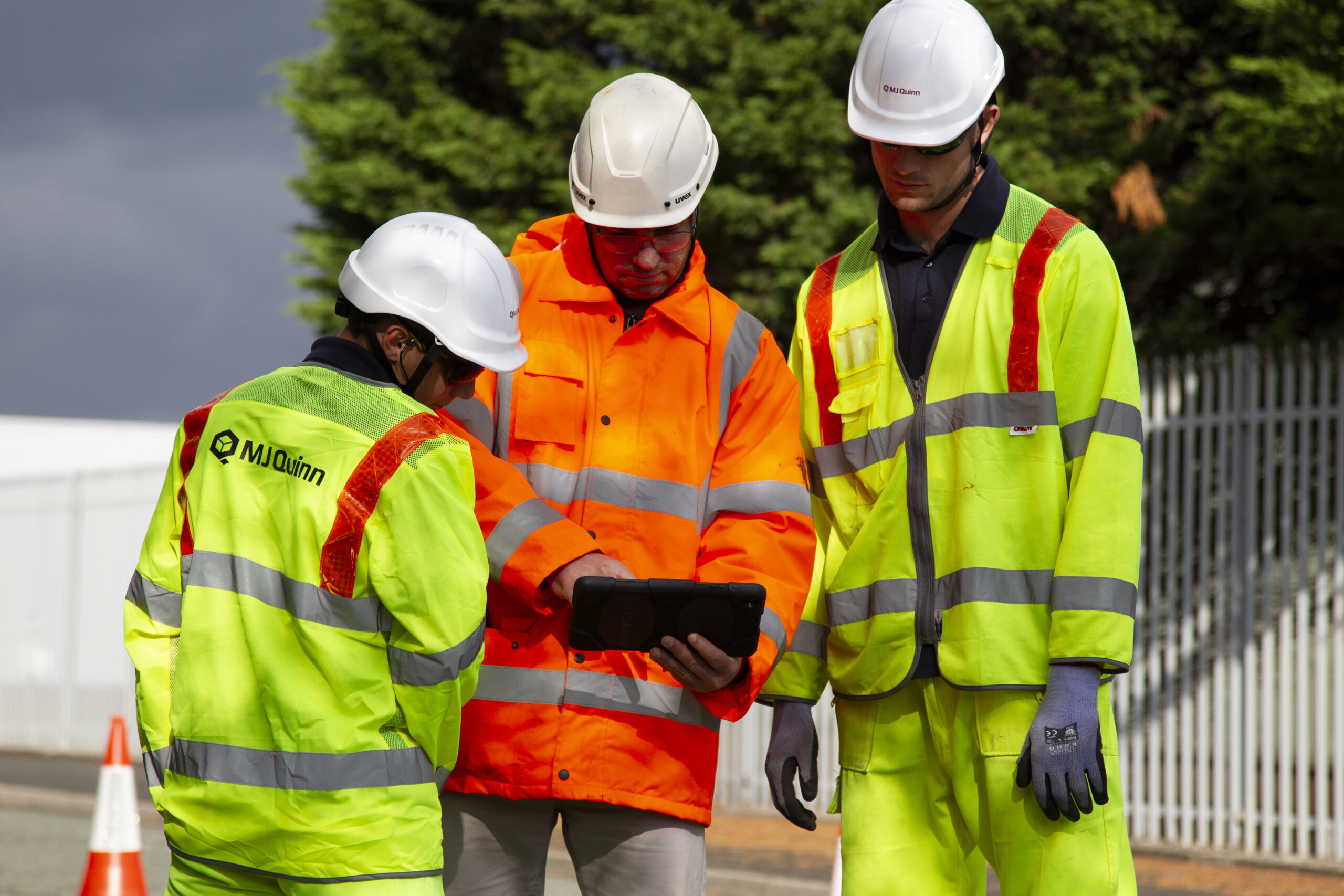
Heavy Cable Recovery is the safe removal of redundant copper telecommunications cables from underground network infrastructure, helping to free capacity within existing ducts and chambers for the continued development of the UK’s telecoms network.
As the UK transitions from legacy copper infrastructure to full fibre broadband, recovering obsolete telecommunications cable has an important role to play in making efficient use of existing network infrastructure.
MJ Quinn delivers Heavy Cable Recovery services across the Openreach network, safely recovering surplus and redundant copper cable from the underground duct network. By removing cable that is no longer required, the programme helps release valuable capacity within existing ducts and chambers while supporting the ongoing modernisation of the UK’s telecommunications infrastructure.
Our experienced Heavy Cable Recovery teams remove redundant cables from existing underground chambers using specialist cable recovery equipment, cable winches and controlled working methods. Where conditions allow, cable can be recovered through existing chambers without the need for excavation, helping to minimise disruption to local communities and road users while allowing work to progress efficiently..
Safety is central to every Heavy Cable Recovery operation undertaken by MJ Quinn.
Before work begins, our teams carry out on-site risk assessments and establish controlled working areas appropriate to the location and activity. Engineers are trained to work safely within underground telecommunications infrastructure and to operate specialist cable recovery equipment, including cable winches.
Worksites are established in accordance with applicable Street Works requirements, with appropriate traffic management, pedestrian protection, signing, lighting and guarding used to help protect our people and members of the public.
Our engineers work in dedicated Heavy Cable Recovery teams, supported by experienced operational management and back-office functions to help maintain safe, efficient and compliant delivery throughout each programme.
Our Heavy Cable Recovery teams combine practical telecommunications network experience with specialist training and accreditation.
Engineers are trained in relevant areas including Openreach SA002, K010, K011 and MT003, alongside NRSWA signing, lighting and guarding requirements.
MJ Quinn supports workforce development through its own Training Academy, helping our engineers maintain the knowledge, competence and practical skills required to undertake specialist cable recovery work safely and effectively across the Openreach network.
Heavy Cable Recovery is about more than simply removing old cable. Recovering redundant copper infrastructure can release capacity within existing underground ducts and chambers, supporting the continued evolution and efficient management of the telecommunications network.
The recovered cable is identified, documented and transported to approved locations for onward handling and disposal, providing a controlled process from initial cable recovery through to final handling.
By combining telecommunications infrastructure experience, specialist operational capability, a trained workforce and a strong focus on safe delivery, MJ Quinn provides Heavy Cable Recovery services designed to support the modernisation of the UK telecoms network efficiently and responsibly.
In 2025, Openreach awarded MJ Quinn a three-year contract extension for its Heavy Cable Recovery programme, continuing our role in delivering this specialist work across the network.
Our approach brings together careful planning, collaboration, specialist training and safe working practices to deliver high-quality telecommunications infrastructure services.
At MJ Quinn, we believe successful infrastructure projects start with careful planning, strong partnerships and a commitment to safe, responsible and high-quality delivery.
What is Heavy Cable Recovery?
Heavy Cable Recovery is the controlled removal of redundant telecommunications cable, particularly legacy copper cable, from underground ducts and chambers. Removing obsolete cable can free capacity within existing network infrastructure and support future network development.
Why is redundant copper cable recovered?
As telecommunications networks transition from legacy copper infrastructure towards full fibre, some existing copper cables become redundant. Recovering these cables can release space within ducts and chambers and allow existing underground infrastructure to be used more efficiently.
Does Heavy Cable Recovery require excavation?
Not always. Where network and site conditions allow, MJ Quinn can recover redundant cable through existing underground chambers using specialist cable recovery equipment, reducing the need for excavation and helping to minimise disruption.
How does MJ Quinn carry out Heavy Cable Recovery safely?
MJ Quinn uses trained Heavy Cable Recovery teams, site-specific risk assessments, controlled working areas and specialist equipment. Works are supported by appropriate traffic management, pedestrian protection and Street Works controls where required.
What Heavy Cable Recovery training do MJ Quinn engineers have?
MJ Quinn engineers receive specialist training relevant to their work, including areas such as Openreach SA002, K010, K011 and MT003, together with NRSWA signing, lighting and guarding requirements.
What happens to recovered telecommunications cable?
Recovered cable is identified and documented before being transported to approved locations for onward handling and disposal, helping provide a controlled process from recovery through to final handling.


At MJ Quinn we believe new projects should be undertaken with great amount of consideration, planning and research.
